

LEARNING OBJECTIVES
Pupils will:
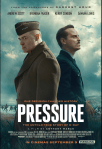
- Explore how the film “Pressure” portrays the clash between two weather forecasts before D-Day, and the temptation to believe the forecast that people wanted to hear.
- Investigate confirmation bias, and the differences between objective evidence, subjective experience, and preconceived assumptions.
- Examine how the Bible portrays people responding to evidence they do and do not want to hear, and consider how confirmation bias can affect beliefs, including religious beliefs.
LEARNING OUTCOMES
Pupils will:
- Explain what confirmation bias is, and identify examples of it in the film, in the Bible, and in everyday life, including on social media.
- Distinguish between objective evidence, subjective experience, and preconceived assumptions.
- Recognise confirmation bias in a discussion about religious belief, and suggest how it might be avoided.
SUPPORTING VALUES EDUCATION
This lesson supports pupils’ moral development by encouraging them to examine their own reasoning honestly, and to recognise when they may be choosing the evidence that suits them. It supports pupils’ social development by helping them understand how social media and other sources can reinforce what they already think, and why it matters to seek out other perspectives. It promotes mutual respect and tolerance by inviting pupils to listen carefully to views different from their own, and supports democracy, since weighing evidence fairly and recognising bias are essential to informed participation in public life. It supports pupils’ spiritual development by exploring how beliefs, including religious beliefs, are formed, and how confirmation bias can affect believers and non-believers alike.
FILM CLIPS: “Pressure” (StudioCanal) Certificate: 12A
1. The Untold True Story Of D-Day (1min 24sec)
2. We Must Face the Facts (1min 18sec) (Stop at 43sec, after Eisenhower asks “If not Monday, when?”, to avoid an expletive at 49sec)
3. The Wrath Of Nature Is Real (1min 33sec)
BIBLE
- 1 Kings 22:6-8a (NIRV) “So the king of Israel brought about 400 prophets together. He asked them, ‘Should I go to war against Ramoth Gilead? Or should I stay here?’ ‘Go,’ they answered. ‘The Lord will hand it over to you.’ But Jehoshaphat asked, ‘Is there no longer a prophet of the Lord here? If there is, ask him what we should do.’ The king of Israel answered Jehoshaphat. He said, ‘There is still one other man we can go to. We can ask the Lord for advice through him. But I hate him. He never prophesies anything good about me. He only prophesies bad things. His name is Micaiah.’”
- 2 Timothy 4:3-4 (NIRV) “The time will come when people won’t put up with true teaching. Instead, they will try to satisfy their own desires. They will gather a large number of teachers around them. The teachers will say what the people want to hear. The people will turn their ears away from the truth. They will turn to stories that aren’t true.”
STARTER
- Start using the Pressure: How Do We Know What Is True? PowerPoint from here.
- Slide 1: (Display the statement without comment.) You can never / rely upon a / a weather forecast
- Ask: What do you think about this statement?
- Take a few responses.
- (Teacher note: most pupils will discuss whether weather forecasts can be relied upon, and will not notice that the word “a” appears twice. If someone spots it, congratulate them, and ask how many others noticed.)
- Ask pupils to read the statement again, slowly, one word at a time, and reveal the repeated “a”.
- Explain that many of us miss it, because we are focused on whether we agree with the statement, and our minds see what we expect to see.
- (Teacher note: missing a repeated word is a quirk of how we read, rather than an exact example of the confirmation bias this lesson explores, but it does illustrate how our minds filter what we notice.)
- Slide 2: Explain that today’s lesson explores how what we expect, and what we want to be true, can shape what we notice and what we believe. It is based on the film “Pressure”, about a weather forecast on which thousands of lives depended.
- Slide 3: In June 1944, during the Second World War, the Allies were preparing to land a vast force on the beaches of Normandy, in Nazi-occupied France. This was D-Day. Everything depended on the weather: the ships needed calm seas, the aircraft needed clear skies, and rough weather could turn the landings into a disaster.
- (Teacher note: for classes that have had the other lesson based on this film, “Pressure: Can We Ever Be Certain?”, this can simply be a brief reminder.)
- Play The Untold True Story Of D-Day (then move straight to Slide 8)
- If you cannot play this YouTube video, instead display the Pressure: How Do We Know What Is True? PowerPoint and use the following script:
- Slide 4: The film “Pressure” tells the story of the 72 hours before D-Day. Group Captain James Stagg, a meteorologist (a scientist who studies and forecasts the weather), is summoned to see General Eisenhower, the Supreme Commander of the Allied forces, who tells him: “I need a forecast.”
- Slide 5: Eisenhower has a huge decision to make: should the invasion go ahead on 5th June, or not? Thousands of lives depend on getting it right.
- Slide 6: Stagg warns that two major storms are advancing towards the Normandy coast, but the commanders are determined to get their men onto the beaches. Stagg insists: “We must face the facts, however frightening they may be.”
- Slide 7: The pressure on Stagg is enormous. He is even asked: “Do you want to be personally responsible for losing this war?”
- If you cannot play this YouTube video, instead display the Pressure: How Do We Know What Is True? PowerPoint and use the following script:
MAIN ACTIVITIES
1. Two weather forecasts
- Slide 8: Explain that in the film, Eisenhower receives two very different weather forecasts. Colonel Irving Krick, the American forecaster, uses “analogue” forecasting: comparing the current weather with similar patterns from past years. He predicts good weather for 5th June. Stagg relies on the latest measurements, from weather ships and stations across the Atlantic, and predicts storms.
- (Teacher note: the film simplifies the history. According to the Met Office, the American and British forecasting teams genuinely disagreed about 5th June, but in reality they often worked in different places, and analogue forecasting was a recognised method. The lesson explores the film’s portrayal of Krick, not a historical judgement on him.)
- Explain that pupils are about to watch a tense meeting in which Stagg challenges Krick. Ask them to look out for the accusation that Stagg makes against him.
- Play We Must Face the Facts (stop at 43sec, after Eisenhower asks “If not Monday, when?”, to avoid an expletive at 49sec) (then move straight to the question below)
- If you cannot play this YouTube video, instead display the Pressure: How Do We Know What Is True? PowerPoint and use the following script:
- Slide 9: Krick has told the commanders that the weather on 5th June will be fine, pointing to years when similar conditions brought good weather, such as 1904 and 1925.
- Slide 10: Stagg points out that Krick has left out 1916, when the same conditions brought torrential rain during a battle in the First World War, and thousands of lives were lost. He says: “He’s selecting the data that suits him and ignoring the rest. We must face the facts, however frightening they may be.”
- If you cannot play this YouTube video, instead display the Pressure: How Do We Know What Is True? PowerPoint and use the following script:
- Ask: What do you think of Stagg’s criticism of Krick?
- Help the pupils to dig beneath the statement “He’s selecting the data that suits him and ignoring the rest” to identify the basis of Stagg’s criticism. Draw out that, as the film portrays him, Krick is choosing the evidence that supports the forecast he wants, and leaving out the evidence that does not.
- Slide 11: Explain that this is called confirmation bias: the tendency to look for, notice, and remember evidence that supports what we already believe, or want to believe, while overlooking evidence that does not. It affects everyone, not just people in films: our minds naturally favour evidence that fits our existing views.
- Tell pupils that they will find out later in the lesson what Eisenhower decided.
2. Believing what we want to be true
- Explain that in the next scene, Stagg goes further, telling the commanders why he thinks they are inclined to believe Krick.
- Play The Wrath Of Nature Is Real (then move straight to the question below)
- If you cannot play this YouTube video, instead display the Pressure: How Do We Know What Is True? PowerPoint and use the following script:
- Slide 12: Standing before the most powerful commanders of the war, Stagg tells them that they believe Krick’s forecast because they want to believe it.
- Slide 13: He warns them that they can assemble the greatest armada there has ever been, but if they invade, the men will be washed away: “The storms that I’m talking about are real.”
- If you cannot play this YouTube video, instead display the Pressure: How Do We Know What Is True? PowerPoint and use the following script:
- Ask: Why might the commanders have wanted to believe Krick’s forecast?
- Draw out that the troops were ready, any delay was risky, and everyone was hoping for good news.
- Slide 14: Summarise with Stagg’s words: “You want to believe… that it’s going to be safe to land in Normandy tomorrow, and so that’s what you believe.”
- Ask: In our world today, can you think of times when people believe something mainly because they want it to be true, regardless of the evidence? Take a few examples.
- If appropriate, explain that social media tends to reinforce confirmation bias. It shows us more of the kind of content we have already watched and liked, so our feeds can end up confirming the views we already hold. Ask: How might confirmation bias on social media affect what people think is true?
- (Teacher note: keep this discussion general, and steer away from personal or politically divisive examples.)
3. Evidence, experience, or assumption?
- Ask: In the film, what different things were people relying on when they thought about the weather for 5th June?
- Draw out three different kinds of things: Stagg’s latest measurements from weather ships and stations; the commanders’ memories of a battle in 1916, when storms brought chaos (“Many people here will remember that battle”); and the commanders’ conviction that the invasion simply had to go ahead.
- Slide 15: Summarise the three kinds of things as categories:
- Objective evidence: information that can be measured or checked, and is the same whoever looks at it (Stagg’s measurements).
- Subjective experience: what a person feels, experiences, or remembers internally, which is real and important to them, but may not apply to every situation (the commanders’ memories of 1916).
- Preconceived assumptions: beliefs that people already hold before they look at the objective evidence or subjective experience (that the invasion must go ahead on Monday).
- (Teacher note: Krick’s historical weather data was also objective evidence; the film’s point is that he used it selectively. Pupils may notice that objective evidence can still be used in a biased way, which is worth drawing out if it arises.)
- Give everyone a copy of the Pressure: Evidence, Experience, or Assumption? Worksheet. In pairs, pupils sort a set of statements into the three categories. Some come from the D-Day story, and some from everyday life.
- (Teacher note: suggested answers, although some statements could fit more than one category: 1 objective evidence; 2 subjective experience; 3 preconceived assumption; 4 objective evidence, but chosen selectively, as Krick does in the film; 5 subjective experience shaped by a preconceived assumption; 6 objective evidence; 7 preconceived assumption; 8 subjective experience; 9 objective evidence, although a forecast is still a judgement; 10 someone else’s subjective experience, plus a preconceived assumption; 11 objective evidence; 12 preconceived assumption based on subjective experience.)
- Take feedback. Ask: Which statements were hardest to sort, and why?
- Draw out that the categories can overlap, and that subjective experience and preconceived assumptions can easily feel like objective evidence to the person who holds them.
- Slide 16: Summarise: subjective experience and preconceived assumptions can feel like objective evidence, which is one reason confirmation bias is so hard to spot in ourselves.
4. What the Bible describes
- Explain that confirmation bias is not a new idea: the Bible describes the same tendency, in stories written thousands of years ago. In this story from the Old Testament, King Ahab of Israel is deciding whether to go to war against the city of Ramoth Gilead, together with Jehoshaphat, the king of Judah.
- Slide 17: Read aloud 1 Kings 22:6-8a.
- Ask: In what ways is King Ahab like the commanders in “Pressure”?
- Draw out that Ahab gathers 400 prophets who all tell him what he wants to hear, and admits that he hates the one prophet who does not, simply because Micaiah tells him unwelcome news.
- (Teacher note: in the rest of the story, a messenger urges Micaiah to agree with the other prophets, but Micaiah warns that the battle will end in disaster. Ahab has Micaiah imprisoned, goes to war, and is killed by an arrow shot at random (1 Kings 22:13-37). The chapter also includes a vision of a “lying spirit” (verses 19–23), which raises difficult theological questions beyond the scope of this lesson, but is worth being aware of in case pupils read further.)
- Slide 18: Summarise: King Ahab surrounded himself with voices that told him what he wanted to hear.
- Explain that a letter in the New Testament, written to Timothy, a young church leader, describes the same tendency.
- Slide 19: Read aloud 2 Timothy 4:3-4.
- Ask: What does this passage say people will do? Why do you think the same tendency appears in both the Old and New Testaments, and in a film set in 1944?
- Draw out that it seems to be a deep and lasting part of human nature. Christians believe that the Bible describes this tendency honestly, that people prefer to hear what makes them feel comfortable, and that God calls people to seek the truth, even when it is unwelcome.
- Slide 20: Summarise: Christians believe that God calls people to seek the truth, even when it is uncomfortable. (Like a football coach pointing out errors to a player.)
5. Pulling it together
- Remind pupils that they were going to find out what Eisenhower decided. Explain what happened: Eisenhower delayed the invasion by 24 hours on Stagg’s advice. Stagg then forecast a brief break in the weather, and Eisenhower ordered the invasion to go ahead on 6th June 1944. Conditions were good enough for the landings to go ahead (Imperial War Museums).
- Ask: How was Eisenhower’s response different from King Ahab’s?
- Draw out that, as the film portrays it, Eisenhower listened to the forecast he did not want to hear, and acted on it, whereas Ahab rejected Micaiah’s unwelcome message and surrounded himself with voices that agreed with him.
- Slide 21: Summarise: Eisenhower chose to act on the forecast he did not want to hear.
- Ask: How can we guard against confirmation bias in our own lives, including in what we believe?
- Draw out ideas such as listening to people who see things differently, noticing the evidence we tend to ignore, asking what would change our minds, and being honest about what we want to be true.
- Slide 22: Summarise: we can guard against confirmation bias by seeking out other views, and by being honest about the evidence we would rather ignore.
- Explain that pupils will now look for confirmation bias on both sides of a conversation about religious belief.
- (Teacher note: questions about certainty may arise during this lesson, such as how we can decide anything, or believe anything, when we cannot be completely certain. The other lesson based on this film, “Pressure: Can We Ever Be Certain?”, explores these questions, and makes a good follow-on.)
ASSESSMENT OF LEARNING
- Give everyone a copy of the Just What I Wanted to Hear? Worksheet.
- Explain that the worksheet shows a conversation between two people about whether God exists. One believes in God, and the other does not. The task is not to decide who is right, but to look for confirmation bias on both sides.
- Pupils work individually to identify the lines that show confirmation bias, explaining how each one shows it, and then write a short message to one of the two people, advising them how they could avoid confirmation bias.
- Take feedback from a few pupils on the lines they identified, and on their advice. Remind the class that confirmation bias affects everyone, whatever they believe.
- (Teacher note: the conversation is deliberately balanced. Several of each person’s lines can be read as showing confirmation bias, some more clearly than others, and their other lines are reasonable points or honest experiences. Neither is presented as foolish, and the conversation does not settle who is right. Pupils may reasonably interpret some lines differently, so look for their reasoning rather than a fixed answer. Some pupils may hold strong personal views, so affirm thoughtful and respectful reasoning, whatever its conclusion. Be aware that the question of suffering may be personal for some pupils.)
YOU WILL NEED:
- Pressure: How Do We Know What Is True? PowerPoint
- Pressure: Evidence, Experience, or Assumption? Worksheet
- Just What I Wanted to Hear? Worksheet
- (If accessible in your school) the means to play the YouTube clips: The Untold True Story Of D-Day, We Must Face the Facts, and The Wrath Of Nature Is Real
Copyright. Film clips, images, posters, and other promotional materials remain the copyright of their respective rights holders and are used here for educational purposes in connection with study and discussion related to the film. Film materials are reproduced here, and provided for use in educational establishments, under relevant UK educational copyright exceptions (Sections 32 and 34 of the Copyright, Designs and Patents Act 1988) and/or fair dealing provisions where applicable.

