

LEARNING OBJECTIVES
Pupils will:
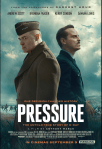
- Explore how the film “Pressure” portrays Eisenhower having to trust uncertain weather forecasts when he makes a decision upon which thousands of lives depend.
- Investigate the part that trust and faith play in everyday life, and the difference between “blind faith” and “reasonable faith”.
- Examine how the Bible portrays Thomas as he seeks certainty, and consider what it means to “live by faith, not by sight”.
LEARNING OUTCOMES
Pupils will:
- Explain why we can never have complete certainty when we make necessary and important decisions.
- Explain and evaluate contrasting views on the reasonableness of religious faith.
- Justify their own view on how much certainty is required to make decisions in life, including about religious beliefs.
SUPPORTING VALUES EDUCATION
This lesson supports pupils’ spiritual development by exploring the nature of faith, and the questions of trust and confidence that arise when we cannot be certain. It supports their moral development by considering how to make responsible decisions on the best evidence available, when the consequences matter. It supports their social development by helping them recognise how much everyday life depends on trusting other people. It promotes mutual respect and tolerance by giving a fair hearing to both religious and non-religious views of faith, including views different from their own, and supports individual liberty, by encouraging pupils to reach and justify their own views on questions of belief.
FILM CLIPS: “Pressure” (StudioCanal) Certificate: 12A
1. Official Trailer 2 (1min 6sec)
2. The Fate Of The War Hangs On This (56sec) (If you prefer to avoid an expletive, said under the breath at 26sec, stop at 23sec, after Stagg says “…educated guesswork.”)
3. Operation Overlord (4min 1sec) (Stop at 56sec, after Eisenhower says “The final decision on the timing of D-Day will be mine alone”, which also avoids an expletive at 1min 5sec)
BIBLE
- John 20:25-29 (NIVUK) “So the other disciples told him, ‘We have seen the Lord!’ But he said to them, ‘Unless I see the nail marks in his hands and put my finger where the nails were, and put my hand into his side, I will not believe.’ A week later his disciples were in the house again, and Thomas was with them. Though the doors were locked, Jesus came and stood among them and said, ‘Peace be with you!’ Then he said to Thomas, ‘Put your finger here; see my hands. Reach out your hand and put it into my side. Stop doubting and believe.’ Thomas said to him, ‘My Lord and my God!’ Then Jesus told him, ‘Because you have seen me, you have believed; blessed are those who have not seen and yet have believed.’”
- 2 Corinthians 5:7 (NIVUK) “For we live by faith, not by sight.”
STARTER
- Start using the Pressure: Can We Ever Be Certain? PowerPoint from here.
- Slide 1: (Display the first image without comment.) Ask: What do you think is happening in this picture?
- Take a few responses.
- Slide 2: (Reveal the full picture.) Ask: Now that you can see the whole picture, would you take that step? What makes you willing, or unwilling?
- Draw out that we can see a glass walkway, and other people already standing on it safely, but we still cannot be completely certain that it will hold us. Anyone who steps out is trusting it, on the basis of good reasons.
- (Teacher note: keep this light and practical. If any pupil makes a remark about falling or jumping, steer the discussion back to what would make the walkway trustworthy. Be aware that, for a few pupils, an image of a cliff edge may carry personal associations.)
- Slide 3: Explain that today’s lesson is based on the film “Pressure”. It explores whether we can ever be completely certain and, if not, how we decide what to trust.
- Slide 4: In June 1944, during the Second World War, the Allies were preparing to land a vast force on the beaches of Normandy, in Nazi-occupied France. This was D-Day. Everything depended on the weather: the ships needed calm seas, the aircraft needed clear skies, and rough weather could turn the landings into a disaster.
- (Teacher note: for classes that have had the other lesson based on this film, “Pressure: How Do We Know What Is True?”, this can simply be a brief reminder.)
- Explain that they are going to see the trailer for the film “Pressure”. Ask pupils to listen out for the question asked near the end.
- Play Official Trailer 2 (then move straight to the question below)
- If you cannot play this YouTube video, instead display the Pressure: Can We Ever Be Certain? PowerPoint and use the following script:
- Slide 5: D-Day will be the largest seaborne invasion in history. Group Captain James Stagg, a meteorologist, is told that he has 61 hours to produce the forecast on which it depends.
- Slide 6: Stagg warns that two major storms are stretching across the Atlantic towards Normandy. Another meteorologist disagrees and the commanders want to go ahead.
- Slide 7: The decision comes down to a simple question: “Go or don’t go?” Eisenhower asks Stagg: “Why should I trust you?”
- If you cannot play this YouTube video, instead display the Pressure: Can We Ever Be Certain? PowerPoint and use the following script:
- Ask: Eisenhower asks why he should trust Stagg. What does it take to trust someone, or something?
- Draw out that trust usually rests on reasons, such as evidence, experience, or someone’s track record. The commanders could not see the storms for themselves, so they had to decide whether to trust Stagg’s forecast, without being certain that it was right.
- Slide 8: Introduce the lesson’s question: can we ever be certain, and if we cannot, how should we decide what to do, and what to believe?
MAIN ACTIVITIES
1. Longing for certainty
- Ask: How certain do you need to be before you make an important decision? Take a few responses.
- Explain that in the film, Eisenhower needs to know what the weather will be on Monday 5th June, the planned date for D-Day.
- Play The Fate Of The War Hangs On This (if you prefer to avoid an expletive, said under the breath at 26sec, stop at 23sec, after Stagg says “…educated guesswork.”) (then move straight to the question below)
- If you cannot play this YouTube video, instead display the Pressure: Can We Ever Be Certain? PowerPoint and use the following script:
- Slide 9: Eisenhower tells Stagg that the fate of the war hinges on this decision. All the pieces of the jigsaw are in place, except one, the weather, and he demands a forecast.
- Slide 10: Stagg replies that he is concerned that what Eisenhower is asking is “scientifically impossible”: “Long-term forecasting is really only ever educated guesswork.” In northern Europe, he explains, anything over 24 hours is considered long-term.
- If you cannot play this YouTube video, instead display the Pressure: Can We Ever Be Certain? PowerPoint and use the following script:
- Ask: Why does Stagg say that what Eisenhower is asking is “scientifically impossible”?
- Draw out that a forecast is a judgement about the future, made on the evidence available, and the weather can always change.
- Ask: Many people assume that science gives us certainty. Can a scientist ever prove that a theory is completely true?
- Slide 11: Explain that the philosopher Karl Popper argued that a scientific theory can never be finally proved right, however much evidence supports it, because new evidence could always show it to be wrong. A famous example is the statement “All swans are white”. No number of white swans could prove it, but a single black swan would prove it wrong, and Europeans were surprised when they found black swans in Australia.
- (Teacher note: Popper’s view has been very influential, though philosophers continue to debate it. It does not mean that science is unreliable. Scientists can be very confident in well-tested theories, but that confidence rests on accumulated evidence, not on complete certainty.)
- Ask: Why do you think people long for certainty, especially before an important decision?
- Draw out ideas such as fear of getting it wrong, the weight of responsibility for others, and the wish to feel safe.
- Slide 12: Summarise: we long for certainty, but even science cannot give us complete certainty.
2. Faith in everyday life
- Ask: What do you trust every day, without being completely certain?
- Unless the pupils suggest something similar, follow up by asking: When you eat food in the canteen, do you know for certain that it is not poisoned? When you sat down on that chair, did you know for certain that it would not collapse under you?
- Draw out the reasonable evidence: the people who prepare our food do not want to harm us, and food from the same place has been safe before; the chair looks solid, and we have seen other people sit on it. Having weighed that evidence, we take a step of trust (some would call it a step of faith), by eating or sitting, and then find out for ourselves whether our trust was well placed, just like stepping out onto the glass walkway.
- Ask: What would happen if we insisted on complete certainty before we acted?
- Draw out that we would never eat, sit down, or perhaps even do anything, because we can never have complete certainty.
- (Teacher note: everyday trust is often used as an analogy for religious faith. It is a contested one, which part three explores.)
- Slide 13: Summarise: we all live by reasonable faith every day. We weigh the evidence, and then take a step of faith, without complete certainty.
3. Blind faith or reasonable faith?
- Ask: Is religious faith like trusting a chair or eating in the canteen? Or is it more like believing something without any evidence at all? Take a few responses.
- Slide 14: Explain that the well-known atheist Richard Dawkins argues that religious faith is not like everyday trust at all. He says that faith “means blind trust, in the absence of evidence, even in the teeth of evidence”.
- Ask: What do you think would make faith “blind”?
- Explain that many Christians would disagree with Dawkins. They would say that faith is a reasonable response to evidence and experience, such as the historical evidence about Jesus and their own experience of God, rather than a leap in the dark.
- Slide 15: Read aloud 2 Corinthians 5:7. Ask: According to Paul, what is the opposite of living by faith?
- Draw out that he contrasts faith with sight, not with reason. Living by faith means trusting what we cannot yet see, which need not mean believing without reasons.
- Explain that critics reply that trusting a chair rests on repeated experience that anyone can test, and that religious claims cannot be tested in the same way. Christians might respond that many important things in life, such as trusting a friend, cannot be tested like a chair either.
- Give everyone a copy of the Blind Faith or Reasonable Faith? Worksheet. In pairs, pupils place a set of everyday statements of trust, and a set of generic statements of religious belief, on a scale from “blind faith” to “reasonable faith”. They justify their placement of one example from each set.
- (Teacher note: there are no right answers. Pupils’ placements of the everyday or religious statements will reflect their own beliefs, so affirm thoughtful reasoning, whatever its conclusion, and keep the discussion respectful.)
- Ask: Where did you mark the line between blind faith and reasonable faith, in everyday life and in religious belief? Were there differences between them and, if so, why? Take a range of views.
- Slide 16: Summarise: living with trust and faith need not mean living unreasonably, but people disagree about the extent to which religious faith is reasonable.
4. We still have to decide
- Ask: If the weather forecast could never be certain, could Eisenhower simply wait until he was sure?
- Play Operation Overlord (stop at 56sec, after Eisenhower says “The final decision on the timing of D-Day will be mine alone”, which also avoids an expletive at 1min 5sec) (then move straight to the question below)
- If you cannot play this YouTube video, instead display the Pressure: Can We Ever Be Certain? PowerPoint and use the following script:
- Slide 17: D-Day is just 61 hours away, and Eisenhower demands a forecast by the next morning. Stagg warns that they face two aggressive storms, one after the other.
- Slide 18: The largest seaborne invasion in history was ready, but everything depended on one thing: the weather forecast.
- Slide 19: Eisenhower, the Supreme Commander, makes it clear: “The final decision on the timing of D-Day will be mine alone.”
- If you cannot play this YouTube video, instead display the Pressure: Can We Ever Be Certain? PowerPoint and use the following script:
- Ask: What does Eisenhower’s statement tell us about making decisions?
- Draw out that someone has to decide, even without certainty, and that waiting is itself a decision, with consequences of its own.
- Explain what happened: Eisenhower delayed the invasion by 24 hours on Stagg’s advice. Stagg then forecast a brief break in the weather, and Eisenhower ordered the invasion to go ahead on 6th June 1944. Conditions were good enough for the landings to go ahead (Imperial War Museums).
- Slide 20: Summarise: even when we cannot be certain, we often still have to decide, and not deciding is itself a decision.
5. The proof we ask for
- Ask: Have you ever heard someone say, “I’ll believe it when I see it”? When might that be a sensible thing to say?
- Explain that, according to the Bible, after Jesus died, he rose from the dead and appeared to his disciples. But one of them, Thomas, was not there.
- Slide 21: Read aloud John 20:25-29.
- Ask: What did Thomas say he would need before he would believe?
- Draw out that he set very specific conditions in advance: to see the nail marks, and to put his finger where the nails were and his hand into Jesus’ side (verse 25).
- Ask: When Jesus invited Thomas to do exactly that, what did Thomas actually do?
- Draw out that the text does not say he touched the wounds at all. Instead, he responded straight away: “My Lord and my God!”
- Ask: How does Thomas’ demand for certainty compare with our own longing for certainty?
- Draw out that, like many of us, Thomas wanted certainty. So, he set specific strict conditions in advance. But, according to the Bible, when Thomas encountered the risen Jesus, he found that he no longer needed those specific strict conditions to be met.
- (Teacher note: Thomas is not condemned for asking for evidence. Many Christians understand Jesus’ words in verse 29, “blessed are those who have not seen and yet have believed”, as speaking to later believers, whose faith rests on evidence from the historical records, testimony from other people, and their own personal experience.)
- Slide 22: Summarise: Thomas set his own conditions for certainty but, according to the Bible, when he met the risen Jesus, he found that he no longer needed them.
6. Pulling it together
- Ask: So, can we ever be completely certain? And if we cannot, how should we decide what to do, and what to believe?
- Draw out both views, without settling them: some people, like Dawkins, see religious faith as belief without evidence, even in spite of contrary evidence; many Christians see it as a reasonable step of faith based upon historical evidence, testimony from other people, and their own personal experience.
- Slide 23: Summarise: we can rarely, if ever, be completely certain about the things that matter most, so the real question is whether our trust rests on reasonable evidence.
- Explain that pupils will now consider this question for themselves.
ASSESSMENT OF LEARNING
- Give everyone a copy of the Is Religious Faith Blind? Worksheet.
- Explain that the worksheet imagines an atheist saying that religious belief is blind faith, in the absence of evidence, even in spite of contrary evidence.
- Pupils work individually to write what a Christian might say in response, how the atheist might reply to that response, and their own view, with their justification.
- Take feedback from a few pupils, encouraging a range of views.
- (Teacher note: there is no single correct answer. Pupils may hold strong views either way, so affirm thoughtful and respectful reasoning, whatever its conclusion. The strongest answers represent both views fairly before giving their own.)
YOU WILL NEED:
- Pressure: Can We Ever Be Certain? PowerPoint
- Blind Faith or Reasonable Faith? Worksheet
- Is Religious Faith Blind? Worksheet
- (If accessible in your school) the means to play the YouTube clips: Official Trailer 2, The Fate Of The War Hangs On This, and Operation Overlord
Copyright. Film clips, images, posters, and other promotional materials remain the copyright of their respective rights holders and are used here for educational purposes in connection with study and discussion related to the film. Film materials are reproduced here, and provided for use in educational establishments, under relevant UK educational copyright exceptions (Sections 32 and 34 of the Copyright, Designs and Patents Act 1988) and/or fair dealing provisions where applicable.

