

ASSEMBLY OBJECTIVE
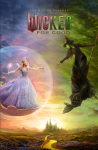
This assembly uses clips from “Wicked: For Good” to explore how “being good” may be different from “being seen as good”, and why doing the right thing can sometimes come with a cost. Pupils will reflect on reputation, peer pressure, courage, integrity, and the choices people make when faced with injustice or public opinion. Through considering relevant Bible passages, pupils will explore the Christian belief that God looks beyond outward appearances, seeing what is truly in a person’s heart, and that living with justice, mercy, honesty, and courage matters more than image or reputation.
FILM CLIPS “Wicked: For Good” (Universal Pictures) Certificate: 12A
1. Wicked & Good Featurette (1min 55sec).
2. Wicked: For Good Trailer (1min 19sec) (Play from 50sec “The Wonderful Wizard of Oz” and stop at 2min 9sec after “It’s time for both of us to fly”).
BIBLE
- 1 Samuel 16:7 (NIV) “The Lord said to Samuel: ‘People look at the outward appearance, but the Lord looks at the heart.'”
- Micah 6:8 (NIV) “You must act with justice. You must love to show mercy. And you must be humble as you live in the sight of your God.”
- Matthew 23:5 (NIV) “Everything they do is done for people to see.”
SUPPORTING VALUES EDUCATION
The assembly explores values including mutual respect, individual liberty, and tolerance of different perspectives. It enables pupils to reflect on moral courage, integrity, and the importance of standing up for what is right even when it is difficult or unpopular. It encourages critical thinking about reputation, public opinion, and the ways people can be judged unfairly based on appearance, rumours, or labels. Pupils are invited to consider the importance of honesty, compassion, and respectful disagreement, while also exploring themes of justice, empathy, anti-bullying, and responsible leadership.
OPENING ACTIVITY “Quick Vote” (See the bottom of this page for alternative options)
- I am going to ask a series of quick questions. For each one, please vote with a show of hands, put your hand up if you would answer “yes”, and keep your hands down if you would answer “no”.
- (Select from the following questions as appropriate for your pupils.)
- In films, are the heroes usually easy to recognise?
- Have you ever watched a film where the “villain” turned out not to be completely bad?
- Do crowds in films usually make good decisions?
- Can someone break rules but still do the right thing?
- Is the most popular character usually the best person?
- Can someone do the right thing and still end up unpopular?
- Do people sometimes believe rumours too easily?
- Is it easier to follow the crowd than stand alone?
- Can someone look good on the outside but behave badly underneath?
- Would you rather be liked by everyone than respected for doing what is right?
- Today’s assembly explores what really makes someone “good”, and whether public opinion is always right.
SCRIPTED TALK (See the bottom of this page for Headings/Bullets version)
- Today I want to start with a question that sounds simple, but actually isn’t simple at all.
- What makes someone ‘good’?
- (Start using the Wicked: For Good, Doing Right, PowerPoint from here.)
- Slide 1:
- In the film “Wicked: For Good”, there are two main characters: Elphaba, who becomes known as the “Wicked Witch”, and Glinda, who becomes celebrated as “Glinda the Good”.
- The film explores what happens to their friendship as they make very different choices about what they believe is right.
- At the heart of the story is a big question: does being seen as bad actually mean that someone is bad, and being seen as good actually mean that someone is good? Or is life really more complicated than that?
- In films, the heroes usually look confident, inspiring, and admirable. Whereas villains often look threatening, difficult, rebellious, or different.
- But some stories challenge that idea by asking: What if the person everyone fears is not actually the villain? What if public opinion gets things wrong?
- That is one of the big ideas behind “Wicked: For Good”. This film asks whether labels always tell the truth.
- Slide 2:
- Sometimes in real life, people get labelled very quickly.
- People can be judged because of rumours, appearance, popularity, mistakes, social media, or simply because they are different.
- And once a label sticks, it can be difficult to change.
- Slide 1:
- Have you ever seen someone misunderstood because of what others assumed about them?
- Why do crowds sometimes find it easier to judge than to understand?
- In this story, Elphaba chooses to challenge powerful people and speak against things she believes are wrong.
- But doing that comes with consequences. She loses popularity. She becomes isolated. People begin calling her dangerous and wicked.
- Meanwhile, Glinda becomes admired and celebrated by the people around her.
- The story asks an important question. Is being seen as good the same thing as actually being good?
- (Play Wicked & Good Featurette.)
- If you cannot play this YouTube video, instead display the slides from the Wicked: For Good, Doing Right, PowerPoint and use the following script:
- Slide 3: Elphaba has become hated and feared by the people of Oz after choosing to stand against the Wizard.
- Slide 4: Meanwhile, Glinda has become famous and admired as “Glinda the Good”.
- Slide 5: Glinda is celebrated publicly in sparkling costumes and parades.
- Slide 6: Whilst Elphaba lives alone in the woods.
- Slide 7: Their choices have changed their lives.
- Slide 8: Their friendship is tested by different beliefs about what is right.
- Slide 9: Is being popular more important than being good?
- If you cannot play this YouTube video, instead display the slides from the Wicked: For Good, Doing Right, PowerPoint and use the following script:
- Glinda is celebrated publicly. Whilst Elphaba is hunted and feared.
- But the film deliberately shows that things are more complicated. Elphaba is not evil simply because people call her wicked. In fact, she is fighting against lies and injustice.
- What do you think about the line in the film: “We can’t let good be just a word, it has to mean something”?
- For some people, goodness is more about image than reality. Looking good. Sounding good. Posting the right things. Being admired. Fitting in.
- But real goodness is often harder than that. Sometimes doing the right thing costs us. Exposing lies and injustice led to Elphaba being rejected and labelled.
- History is full of people who were criticised for standing up for what they believed was right.
- Sometimes crowds are wrong. Sometimes powerful people are wrong. Sometimes people labelled “difficult” or “dangerous” are actually the ones challenging injustice.
- (Play Wicked: For Good Trailer from 50sec “The Wonderful Wizard of Oz” and stop at 2min 9sec after “It’s time for both of us to fly”.)
- If you cannot play this YouTube video, instead display the slides from the Wicked: For Good, Doing Right, PowerPoint and use the following script:
- Slide 10: The people of Oz are hunting Elphaba because they believe she is dangerous.
- Slide 11: The Wizard demands her capture.
- Slide 12: However, Elphaba is trying to expose lies, she fights for those being mistreated.
- Slide 13: While many people call her “wicked”, some characters begin to question whether the people in power are actually telling the truth.
- Slide 14: Glinda and Elphaba are both choosing different difficult paths.
- If you cannot play this YouTube video, instead display the slides from the Wicked: For Good, Doing Right, PowerPoint and use the following script:
- Slide 15: Jesus challenged people who appeared good and respectable on the outside but acted unfairly or hypocritically towards others, looking impressive publicly while treating people badly. He said: “Everything they do is done for people to see”.
- Slide 16: In the Bible, it says: “People look at the outward appearance, but the Lord looks at the heart.” Christians believe that God looks beyond appearances, popularity, and labels.
- Slide 17: Christians believe that God sees character, motives, and integrity. In the Bible, it says “You must act with justice. You must love to show mercy. And you must be humble as you live in the sight of your God.”
- Slide 18: Why do you think appearance and reputation can become so important to people? Is it hard to do what is right when it costs you something, such as popularity, comfort, friendships, approval, or reputation? Is it hard to stand apart from the crowd?
- Slide 19: Maybe being “good” is not about looking perfect, being admired, or always being popular. Maybe goodness is really about courage, honesty, compassion, integrity, and standing up for what is right even when it is difficult. And maybe, sometimes, the people labelled “wicked” are simply those who refuse to stay silent.
REFLECTION
Slide 20: Think quietly for a moment: is there a time when we stay silent because it feels easier? Do we judge people too quickly because of rumours or reputations? What kind of person do we want to be when doing the right thing is difficult and costly?
PRAYER
Dear God, help us to look beyond appearances and popularity. Give us courage to do what is right, even when it is difficult. Help us to treat others fairly, to think carefully before judging anyone, and to become people of honesty, kindness, and integrity. Amen.
YOU WILL NEED:
- Wicked: For Good, Doing Right, PowerPoint
- (If accessible in your school) the means to play the YouTube clips: Wicked: For Good Trailer and Wicked & Good Featurette
OTHER OPENING ACTIVITY OPTIONS
Option 2: “What Would You Do?”
- I am going to describe a few situations. Don’t answer out loud, just think honestly to yourself about what you would do.
- (As appropriate for your pupils, read out some of the following scenarios, allowing a short pause after each one.)
- A rumour about someone in your year is spreading quickly. Most people seem to believe it, even though nobody really knows if it is true. Would you join in, stay silent, or challenge it?
- One of your friends is being laughed at by a larger group. You know it is unfair, but speaking up might make people turn on you too. What would you do?
- A person at school has a bad reputation, but you notice they are actually kind and supportive to others when nobody is watching. Would you change your opinion of them?
- Everyone around you thinks a certain person is “the problem”. But deep down, you are not sure the situation is that simple. Would you question it?
- You know somebody is doing the right thing, but it is making them unpopular. Would you support them publicly or only privately?
- Why can it sometimes feel difficult to stand apart from a crowd?
- Why do people sometimes stay silent even when they know something is unfair?
- Today’s assembly explores what really makes someone “good”, and what it can cost to do the right thing.
Option 3: “The Reputation Challenge”
- I am going to read out a list of different reasons why people sometimes get judged. If you have ever seen someone judged for that reason in a film, put your hand up.
- Then, if you have ever seen someone judged for that reason in real life keep your hand up, otherwise put it down.
- (As appropriate for your pupils, read out some of the following examples.)
- One mistake they made
- How much money they have
- Rumours people have heard about them
- Standing up against other people
- The friendship group they belong to
- Their fashion sense or clothing
- Do people tend to judge others too quickly?
- Can someone be labelled as “bad” or “difficult” when they are actually trying to do the right thing?
- In today’s assembly, we are going to explore what really makes someone “good”, and how easy it can be for people to be misunderstood or unfairly judged.
HEADINGS & BULLETS
- Slide 1: Film “Wicked: For Good”. What makes someone good?
- Slide 2: People often get labelled, misunderstood
- (Play Wicked & Good Featurette)
- Slide 3: Elphaba the Wicked Witch is hated
- Slide 4: Glinda the Good is admired
- Slide 5: Contrast between Glinda who is celebrated
- Slide 6: And Elphaba who is rejected
- Slide 7: Choices changed their lives
- Slide 8: Their relationship is tested by different beliefs
- Slide 9: “Popular” or “Good”? “We can’t let good be just a word”
- (Play Wicked: For Good Trailer)
- Slide 10: Hunting Elphaba
- Slide 11: Wizard demands her capture
- Slide 12: Elphaba exposes lies, she fights for the mistreated
- Slide 13: Truth vs public opinion
- Slide 14: The cost of doing right
- Slide 15: “Everything they do is done for people to see”
- Slide 16: The Bible says “People look at the outward appearance, but the Lord looks at the heart”
- Slide 17: “You must act with justice. You must love to show mercy. And you must be humble as you live in the sight of your God”
- Slide 18: Why has appearance and reputation become so important?
- Slide 19: Maybe goodness is about courage, honesty, compassion, and standing apart from the crowd
- Slide 20: What kind of person do you want to be?
Copyright. Film clips, images, posters, and other promotional materials remain the copyright of their respective rights holders and are used here for educational purposes in connection with study and discussion related to the film. Film materials are reproduced here, and provided for use in educational establishments, under relevant UK educational copyright exceptions (Sections 32 and 34 of the Copyright, Designs and Patents Act 1988) and/or fair dealing provisions where applicable.

